Ancient roots, living practice. Today is .

The Celtic lands are thick with thin places. Passage tombs older than writing, royal hills, island sanctuaries, holy wells, stone rows and sacred groves lie within a day’s travel of one another, and the tradition has always known them as doors. Here are nine of the greatest, with their stories and their practicalities. The nearest well or hill to your own door belongs on this list too.

Before You Go

Read the sacred site etiquette. Leave no trace, light no fires, climb on nothing, tie only natural cloth, respect the farmers and the custodians, and give thanks. These places have survived five thousand years; our job is to pass them on.

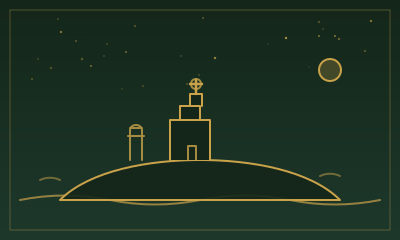
Stylised drawing of Brú na Bóinne
Newgrange, Knowth and Dowth · Co. Meath, Ireland

Brú na Bóinne

c. 3200 BCE

The great passage tombs of the Boyne valley are older than Stonehenge and the pyramids of Giza. At the winter solstice the rising sun passes through a roof-box above the entrance of Newgrange and travels nineteen metres along the passage to light the triple spiral in the chamber. In Irish tradition this is the Brú, the mansion of the Dagda and later of Aengus Óg, god of love and youth, who won it from his father by a trick of language. Knowth holds a third of all the megalithic art in Europe. Access to Newgrange is by guided tour from the visitor centre; the solstice mornings are allocated by lottery.

Winter solstice · ancestors · the triple spiral · the Dagda and Aengus
Stylised drawing of The Hill of Tara
Teamhair na Rí · Co. Meath, Ireland

The Hill of Tara

c. 3000 BCE – 1100 CE

A long, low hill with a vast view, ringed with the earthworks of the seat of the high kings of Ireland. The Mound of the Hostages, a small passage tomb on the summit, is lit by the sunrise at Samhain and Imbolc. The Lia Fáil, the Stone of Destiny, stands nearby and was said to cry out under the rightful king. Here Conaire was inaugurated and Cú Chulainn feasted; here the feis Temro was held and the king was married to the sovereignty of the land. Tara is open at all times and free; walk sunwise around the Forrad and sit a while.

Sovereignty · kingship · Samhain and Imbolc sunrise · the Lia Fáil

Stylised drawing of The Hill of Uisneach
Cnoc Uisnigh · Co. Westmeath, Ireland

The Hill of Uisneach

Neolithic – medieval

The navel of Ireland, where the five provinces met and the druid Mide lit the first fire. On its western slope lies the Ail na Míreann, the Stone of the Divisions, a great glacial boulder said to mark the centre and the burial place of Ériu, the goddess who gave Ireland her name. The Beltane fires were lit here, and have been again since 2009. The hill is in private farmland and is visited by guided tour, which is well worth the arranging.

Beltane · the centre · Ériu · the meeting of the provinces

Stylised drawing of Loughcrew
Sliabh na Caillí · Co. Meath, Ireland

Loughcrew

c. 3300 BCE

The Hills of the Hag, a ridge of cairns where the Cailleach, the old woman of winter, is said to have dropped stones from her apron as she leapt from peak to peak. Cairn T on the summit is aligned to the equinox sunrise, which lights a backstone carved with rayed suns. Outside sits the Hag’s Chair, a great kerbstone in which wishes are made. Quieter than Newgrange and more exposed, Loughcrew is a place to go alone or in small company; the climb takes twenty minutes and the view takes eighteen counties.

Equinoxes · the Cailleach · wishes · the high view

Stylised drawing of Skellig Michael
Sceilg Mhichíl · Co. Kerry, Ireland

Skellig Michael

c. 600 – 1200 CE

A jagged pyramid of rock twelve kilometres into the Atlantic, on which monks built six beehive cells and two oratories six hundred steps above the sea, and lived for six centuries on fish, seabirds and prayer. It is the farthest western outpost of Celtic Christianity and feels like the edge of the world because, for its builders, it was: the next landfall is Newfoundland. Dedicated to Michael the dragon-slayer, as high western places often are. Boats run in summer when the weather allows, and numbers are strictly limited.

Thresholds · the western sea · solitude · the monastic Otherworld

Stylised drawing of Calanais
Callanish · Isle of Lewis, Scotland

Calanais

c. 2900 BCE

A cross of standing stones on a Hebridean moor, with an avenue leading to a central ring and a tall monolith at its heart, older than Stonehenge and aligned to the eighteen-and-a-half-year cycle of the moon. Every lunar standstill the full moon skims the southern hills, which local tradition calls the Sleeping Beauty, and sets within the stones. The Gaelic name for the stones is Na Fir Bhrèige, the false men, giants turned to stone for refusing Christianity; an older tale says a shining one walks the avenue on midsummer morning. Open at all times.

The moon · the long cycle · the shining one · giants turned to stone

Stylised drawing of Iona
Ì Chaluim Chille · Inner Hebrides, Scotland

Iona

563 CE – present

Colum Cille, Columba, came here from Ireland in 563 with twelve companions and founded the monastery from which Scotland and much of northern England were converted. He was a prince of the Uí Néill, trained by the filidh, defended the poets at the convention of Druim Cett, and his biographer records him speaking to angels and prophesying in a manner his druid-trained ancestors would have recognised. The island was a thin place before him and is one still; the abbey, the ancient graveyard of kings and the beaches at the north end are all open. The phrase “thin place” itself comes from Celtic Christian writing about Iona.

Thin places · Colum Cille · the poet-saint · the west

Stylised drawing of Ynys Môn
Anglesey · Wales

Ynys Môn

Neolithic – 60 CE

The druids’ last stronghold in Britain. Tacitus records the Roman assault in 60 CE: the army faced a shore lined with black-robed women waving torches and druids raising their hands to the sky in curses, before the soldiers crossed, slaughtered them and cut down the sacred groves. The island is thick with earlier monuments. Bryn Celli Ddu, the Mound in the Dark Grove, is a passage tomb aligned to the midsummer sunrise with a carved stone inside; Barclodiad y Gawres has spiral art like Newgrange. Llyn Cerrig Bach, a small lake, yielded a hoard of Iron Age weapons, chariot fittings and slave chains thrown into the water as offerings.

The druids · the sacred grove · votive waters · midsummer sunrise

Stylised drawing of Carnac
Karnag · Brittany, France

Carnac

c. 4500 – 3300 BCE

More than three thousand standing stones in rows that march for kilometres across the Breton countryside, the largest megalithic site in the world and still unexplained. Breton legend says they are a Roman legion turned to stone by St Cornely; older tradition has them as the korrigans’ dancing ground. Brittany is the sixth Celtic nation, settled from Britain in the fifth and sixth centuries, and its tradition of the Ankou, death’s coachman, of the drowned city of Ys and of the pardons at saints’ springs is as rich as any in the Gaelic world. The alignments are fenced in summer but can be walked in winter and viewed at all times.

The stone rows · the korrigans · Breton tradition · the Ankou

Further Afield

Nine is only a beginning. Among the many more: Tlachtga, the Hill of Ward in Meath, where the Samhain fire was lit; Glastonbury Tor in Somerset, under which Gwyn ap Nudd keeps his court, with the red-stained Chalice Well at its foot; Emain Macha, Navan Fort, the capital of the Ulster Cycle; Cruachan in Roscommon, with the Cave of the Cats, the mouth of the Otherworld from which Nera walked; Croagh Patrick, the Reek, still climbed barefoot on the last Sunday of July; Tynwald Hill on the Isle of Man, where the laws are still read each midsummer; St Nectan’s Glen in Cornwall, a waterfall shrine thick with ribbons; Dinas Emrys in Snowdonia, where the red and white dragons fought under the hill; and the Ring of Brodgar in Orkney, which is not Celtic at all and does not care.

Walk With Us

Members gather for a midwinter vigil at Brú na Bóinne and a Bealtaine fire at Uisneach most years. See Events.